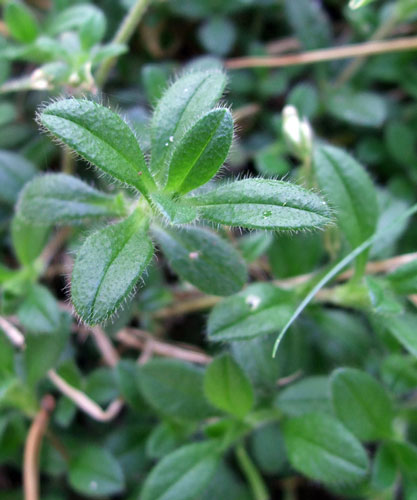
 Botanical name: Cerastium vulgatum
Family: Caryophyllaceae
General information
Mouse-ear chickweed or Mouse-ear as it is also known is a short lived perennial weed that is very common in intensively managed turf and luxury lawns.
It thrives in moist soils that suffer from poor drainage, but can also withstand hot, dry conditions too. It can also tolerate shade.
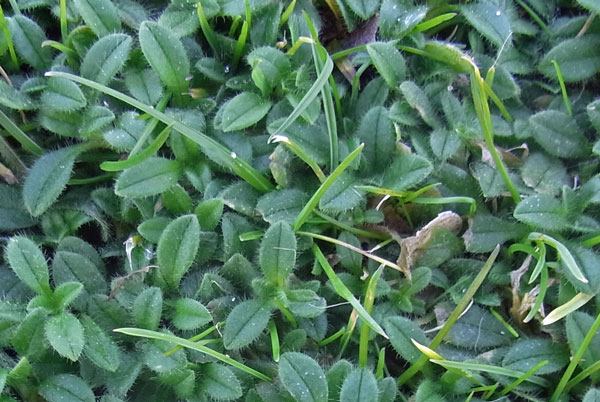
It forms a dense mat that can easily tolerate very low mowing heights, however, it can reach a height of nearly 30 cm if it is left undisturbed.
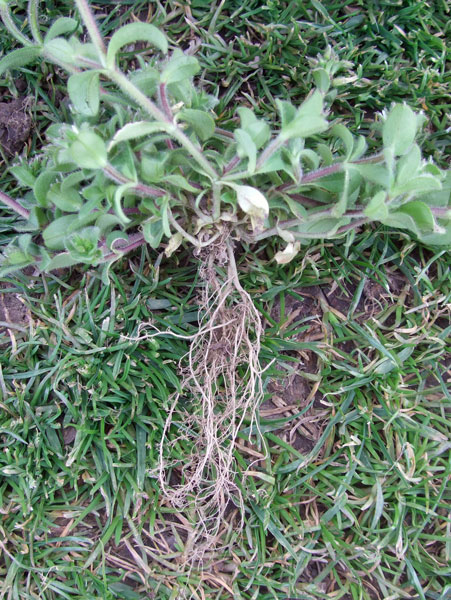
It has a shallow fibrous root system and new plants form from roots, forming from nodes of the stems.
It also reproduces from seed and it blooms continually during the summer months. The plants develop very quickly from seed, and this weed can spread very quickly in a relatively short period.
Mouse-ear chickweed has various medicinal uses, it can be used to soothe skin irritation, cuts, eczema and rashes and contain a rich source of vitamins.
Identification
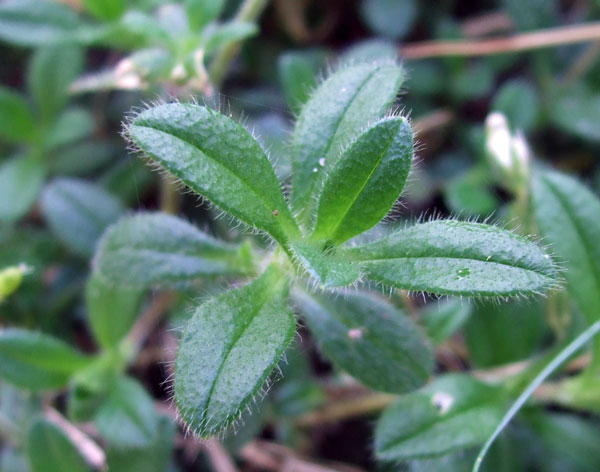
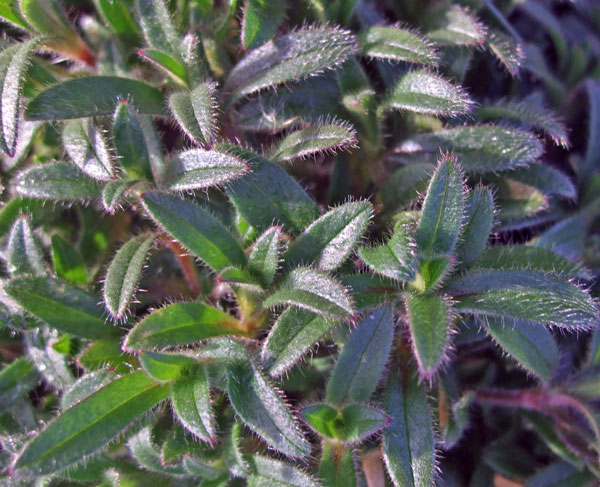
- Leaves: The leaves are opposite and dark green in colour, with the surface being covered in short hairs. They are oval or lanceolate shaped and typically measure between 10 – 20 mm long and 3 – 8 mm wide, however, in fine turf they are often smaller.
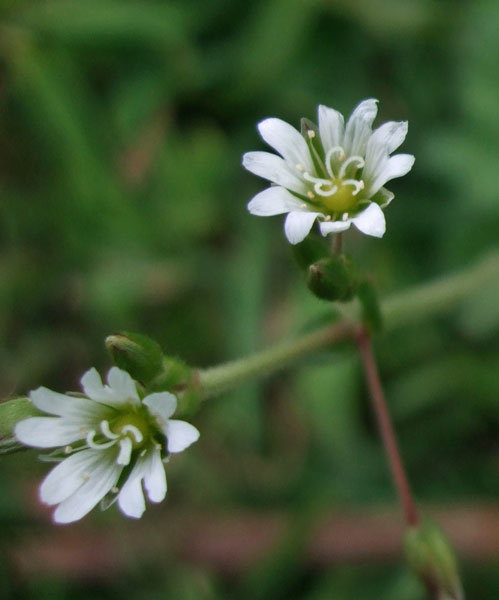
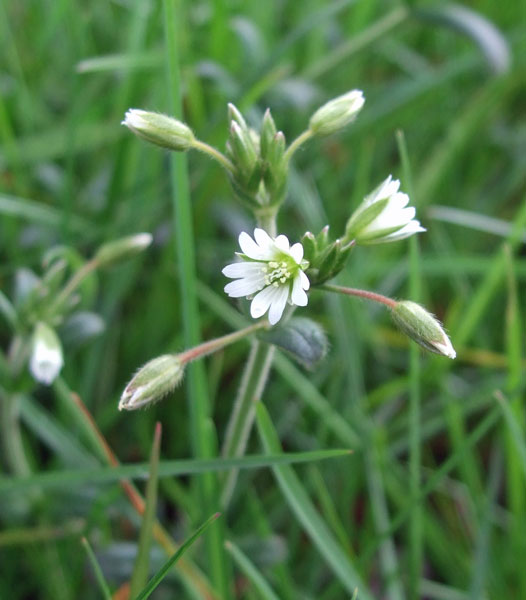
- Flowers: The small flowers of mouse-ear chickweed are very similar to those of common chickweed. They are white, with 5 petals, each petal is deeply cut, often giving the appearance of 10 petals. They measure approximately 6 mm across and flower between April and November.
- Roots: This weed has a fibrous root system.
Mouse-ear Chickweed Images (click image to enlarge)
Prevention and control
Encourage a healthy sward with good turf management practices to reduce the opportunity of weeds invading. Weeds are likely to be more troublesome on neglected turf, where grass coverage is generally thin and weak.
Reducing the shade may help prevent this weed from establishing.
Improve the surface drainage with regular aeration to help reduce the establishment of this weed.
Removing this weed by hand can be an effective way of controlling mouse-ear chickweed, especially if the infestation is not severe.
It the infestation is widespread then a selective weed killer may be the best option. Ideally only treat the infected areas to keep chemical usage down to an absolute minimum. Mouse-ear chickweed is susceptible to most selective herbicides and a single treatment should be enough for complete control.
Selective herbicides recommended for the control of mouse-ear chickweed
Professional products (The user requires the appropriate certificate/s to apply these products)
Headland Relay Turf (Mecoprop-p, Dicamba, MCPA)
Headland Cabadex (Fluroxypyr, Flurosulam)
React Ultra (Mecoprop-p, Dicamba, MCPA)
Everris Praxys (Clopyralid, Fluroxypyr, Fluosulam)
Bayer Longbow (Mecoprop-p, Dicamba, MCPA)
Barclay Holster XL (2,4-D, Fluroxypyr, Dicamba)
Mascot Greenor (Clopyralid, Fluroxypyr, MCPA)
Mascot Junction (2,4-D, Flurosulam)
Mascot Crossbar (2,4-D, Flurosulam, Dicamba)
Vitax Esteem (2,4-D, Clopyralid, MCPA)
Products available for non-professional use (These products are available from garden centres and DIY stores)
Verdone extra (Clopyralid, Fluroxypyr, MCPA)
Resolva lawn weed killer (2,4-D, Mecoprop-p, MCPA, Dicamba)
Doff lawn spot weeder (2,4-D, Mecoprop-p, Dichlorprop-p)
Vitax Lawn Clear (2,4-D, Clopyralid, MCPA)
Vitax Green up weed & feed (Dicamba, MCPA)
Weedol lawn weed killer (Clopyralid, Fluroxypyr, MCPA)
Scotts lawn builder weed & feed (2,4-D, Dicamba)