 Botanical name: Rumex obtusifolius
Family: Polygonaceae
Aliases: bitter dock, bluntleaf dock, dock leaf, butter dock
General Information
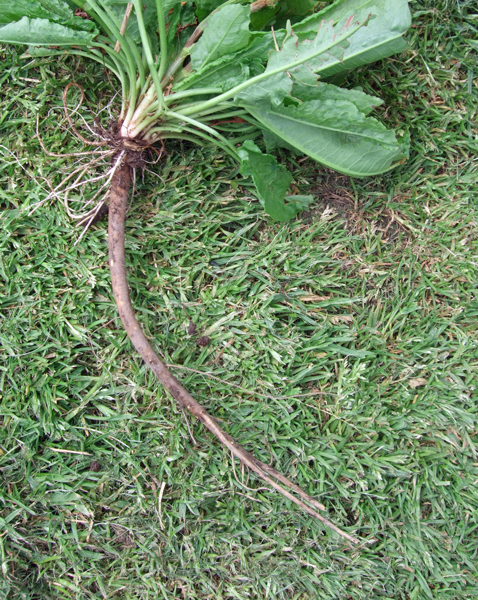
Broad-leaved dock is a perennial weed most commonly found in neglected lawns and rough grassland. Docks have deep tap roots which helps it adapt to a wide variety of soil conditions and environments.
Identification
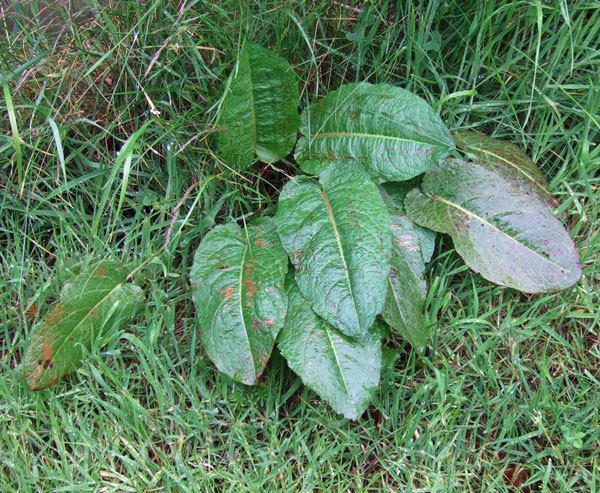
- Leaf – Docks have large broad oval leaves making it easy to identify.
- Flower – Docks flower during the months May to October. They produce many green/white flowers, which when pollinated turn brown ready for dispersal.
- Root – Broad-leaves dock has a stout taproot.
- Preferred Habitat – Broad-leaved dock can thrive in a wide range of soil types and conditions.
Broad-leaved Dock Images (click image to enlarge)
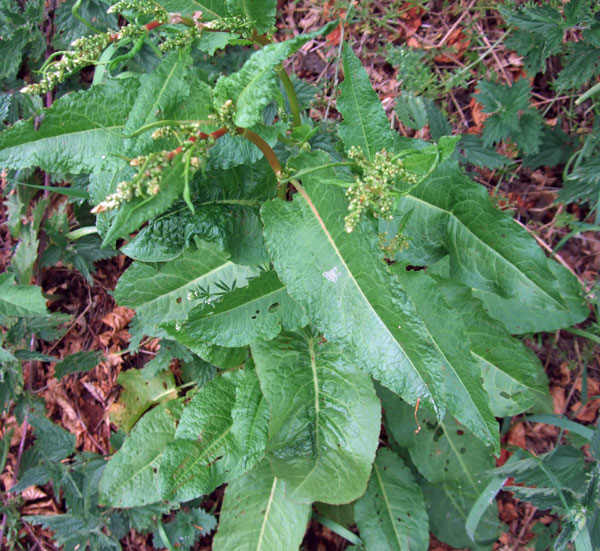
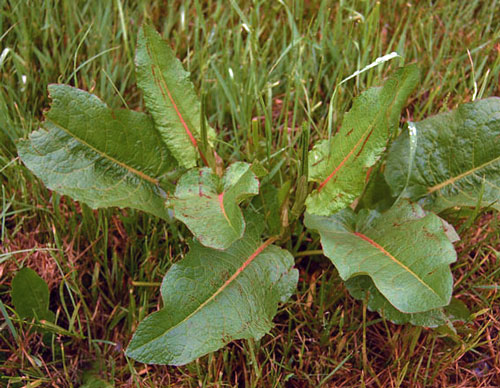
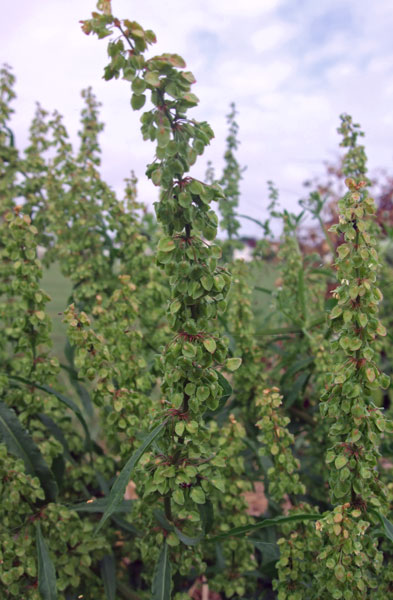
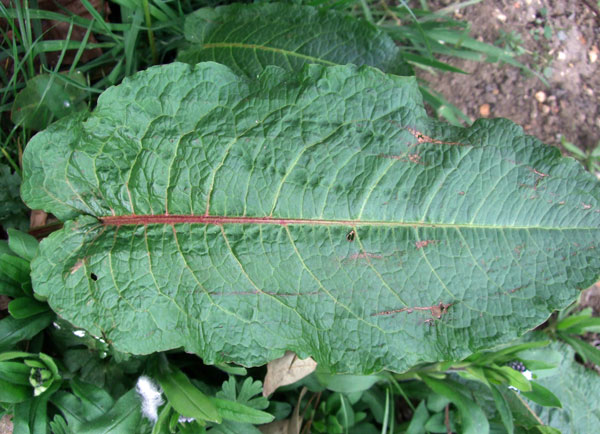
Prevention and control
For a few individual plants hand weeding is preferable, but difficult because the of the length tap root that has to be removed, a small garden fork is ideal for this. Regular mowing is thought to discourage docks as they don’t like close mown lawns, although this is not always the case as they can grow in areas of turf.
For a more widespread problem use a selective weed killer containing fluroxypyr & clopyralid or a 2,4-D mixture. A repeat application will be required 6 weeks later. For more information on the application of selective weed killers please visit our weed control section.
Recommended selective weed killers for Broad-leaved Dock.
- Verdone Extra (fluroxypyr, clopyralid & MCPA).
- Westland lawn weed killer (2,4-D, mecoprop-p & dichlorprop-p).
- Westland lawn feed, weed & moss killer (2,4-D & mecoprop-p) includes a fertiliser.
- Vitax green up lawn weed & feed (2,4-D & dicamba) includes a fertiliser.
- Vitax green up lawn weed & feed + moss killer (2,4-D & mecoprop-p) includes a fertiliser.
- Doff lawn spot weeder (2,4-D, mecoprop-p& dichlorprop-p).
Selective weed killers should be applied between April and October when the weeds are growing, as this will yield the best results.
It is very important that you follow the manufacturers recommendations and health and safety guidelines when applying chemical weed killers.