 Botanical name: Bellis perennis
Family: Asteraceae
General information
The daisy is one of the most familiar lawn weeds. It is a favourite of children, who enjoy picking it and making ‘daisy chains’.
It is often referred to as a pernicious weed, in that it is very difficult to eradicate, they always seen to pop up again the following season.
Daisy’s are a herbaceous perennial plant and are very common in all types of turf, from intensively managed turf to neglected grassland.
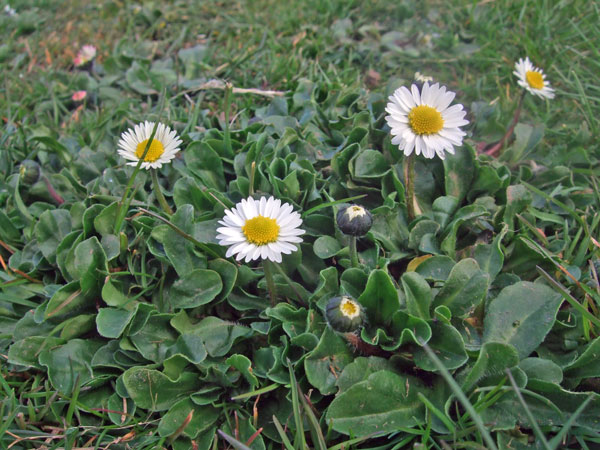
It forms as a basal rosette, quickly colonising into a tight mat. It will tolerate a close and regular mowing regime making it particularly troublesome on luxury lawns and turf.
Daisy Identification
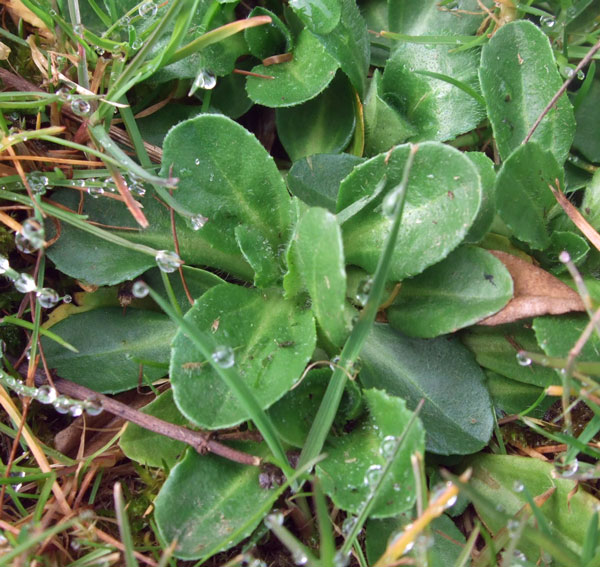
- Leaves: Daisy leaves are oval to spoon shaped, sometimes seen with scalloped edges. In most cases the leaves have a smooth surface, however the presence of fine hair is not uncommon. They measure about 15 mm – 35 mm long in managed turf, but can grow much longer and larger when the plant is undisturbed.
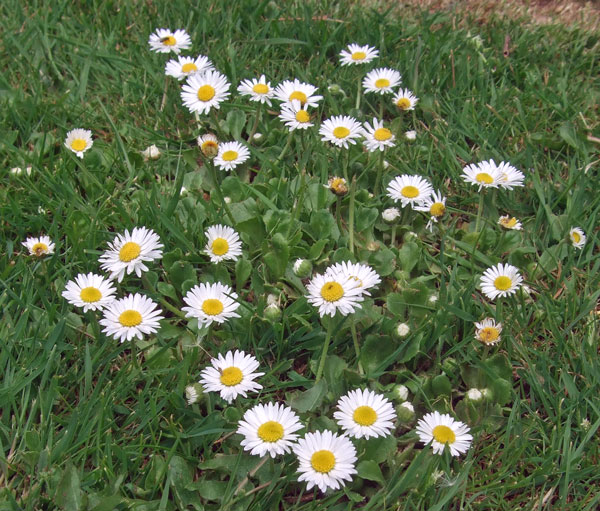
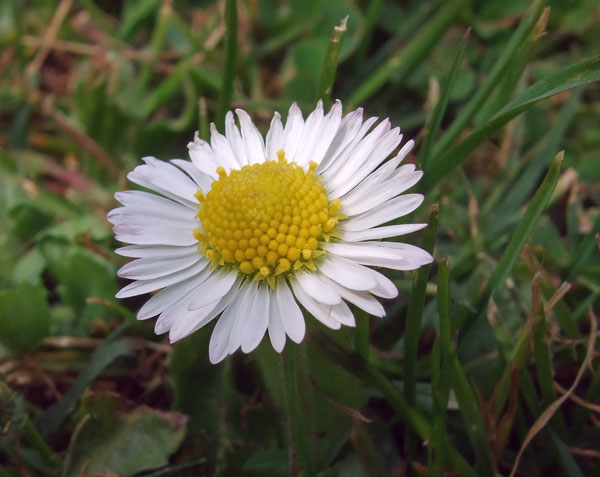
- Flowers: Each daisy produces a cluster of solitary white and yellow flowers, the inner florets are yellow with the outer being white, sometimes a pinkish / red in colour. The flowers are easily removed when mowing, however they are quick to grow back again, as they flower profusely through the growing season. They close at night or on dull days and open during periods of sun light, hence the name daisy (‘day’s eye’). The flowers measure between 15 mm – 25 mm in diameter, typically flowering between March and October.
- Roots: The daisy has a stout, fibrous root system and it spreads by seed and short underground runners known as rhizomes.
Daisy Images (click image to enlarge)
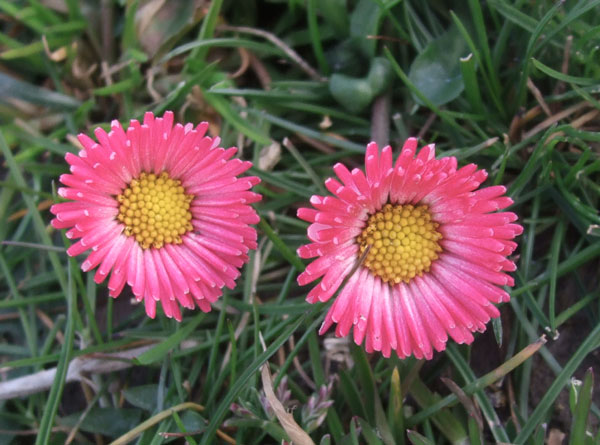
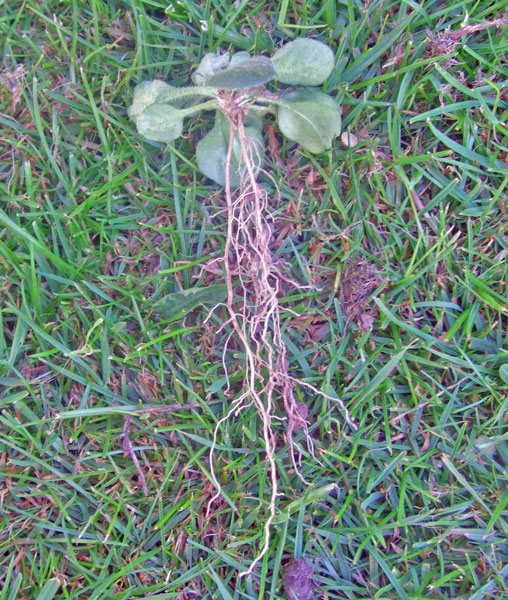
More images and free downloads of daisy
Prevention and control
Ensuring the turf is healthy and thick is the most effective way of preventing weed. Weeds are oportunistic and are more troublesome in neglected areas of turf, where the grass has been allowed to become weak and is lacking in overall vigour.
The most effective way of preventing daisy’s becoming problematic is to remove them when they appear. At this early stage they are easily removed using a small knife or daisy grubber.
Alternatively, a spot weeder can be used. Spot weeders are small containers with a trigger mechanism that spray a pre-mixed solution of selective weed killer onto the weed.
If the infestation is severe, then the only realistic option is to use a selective weed herbicide on the weed. If possible only treat the areas that has been infected. This saves money on wasted pesticide as well as being better for the environment. Always try and avoid chemical usage, or at least try and keep it to a minimum whenever possible.
Remember chemicals are dangerous when used improperly, so take the time to read the instructions before application.
In most cases the daisy is controlled with a single application. If the weed persists then a follow up treatment approximately 6 weeks later should do the trick.
Recommended chemicals for the control of daisy
2,4-D + mecoprop-p
2,4-D + dicamba
fluroxypyr + clopyralid
fluroxypyr + mecoprop-p
Recommended products for daisy control
Professional products (The user requires the appropriate certificate/s to apply these products)
Headland Relay Turf (Mecoprop-p, Dicamba, MCPA)
Headland Cabadex (Fluroxypyr, Flurosulam)
React Ultra (Mecoprop-p, Dicamba, MCPA)
Everris Praxys (Clopyralid, Fluroxypyr, Fluosulam)
Bayer Longbow (Mecoprop-p, Dicamba, MCPA)
Barclay Holster XL (2,4-D, Fluroxypyr, Dicamba)
Mascot Greenor (Clopyralid, Fluroxypyr, MCPA)
Mascot Junction (2,4-D, Flurosulam)
Mascot Crossbar (2,4-D, Flurosulam, Dicamba)
Vitax Esteem (2,4-D, Clopyralid, MCPA)
Products available for non-professional use (These products are available from garden centres and DIY stores.)
Verdone extra (Clopyralid, Fluroxypyr, MCPA)
Resolva lawn weed killer (2,4-D, Mecoprop-p, MCPA, Dicamba)
Doff lawn spot weeder (2,4-D, Mecoprop-p, Dichlorprop-p)
Vitax Lawn Clear (2,4-D, Clopyralid, MCPA)
Vitax Green up weed & feed (Dicamba, MCPA)
Weedol lawn weed killer (Clopyralid, Fluroxypyr, MCPA)
Scotts lawn builder weed & feed (2,4-D, Dicamba)